
History & Background
-
1954
First Hmong Believers
OMF missionaries began proclaiming the Gospel to the Hmong people, leading to the first converts in 1954.
-
1968
Migration from the Highlands
Around 1968 (B.E. 2511), the majority of Hmong Christians migrated down from the mountains to settle in the lowlands.
-
1971
Uniting to Establish a New Village
In 1971 (B.E. 2514), two groups of Hmong Christians relocated and united to establish a new village.
-
1982
Affiliation with District 7
Existing Hmong churches united and affiliated as the Hmong Church Zone under District 7.
-
1989
Leaders’ Conference at Cha-am Camp
Church leaders and ministers met at Cha-am Camp, Phetchaburi Province, agreeing on the necessity of cooperation among local churches.
-
1995
Launch of the 10% Contribution System
Local churches and Christian halls began contributing 10% of their budgets to the zone from 1995 onward.
-
2009
20th Anniversary Celebration
Celebrated the 20th anniversary of uniting as the Hmong Church Zone and set the goal of achieving full District status.
-
2012
Endorsement by District 7
The Annual Ordinary Session of District 7 passed a resolution endorsing the elevation to District status.
-
2016
Approval by the CCT General Assembly
The 34th Ordinary General Assembly of the Church of Christ in Thailand passed a resolution of approval on October 20, 2016.
-
2017
Inauguration of District 20
District 20 was officially inaugurated on April 20, 2017.
A Brief History and Development of the Establishment of District 20
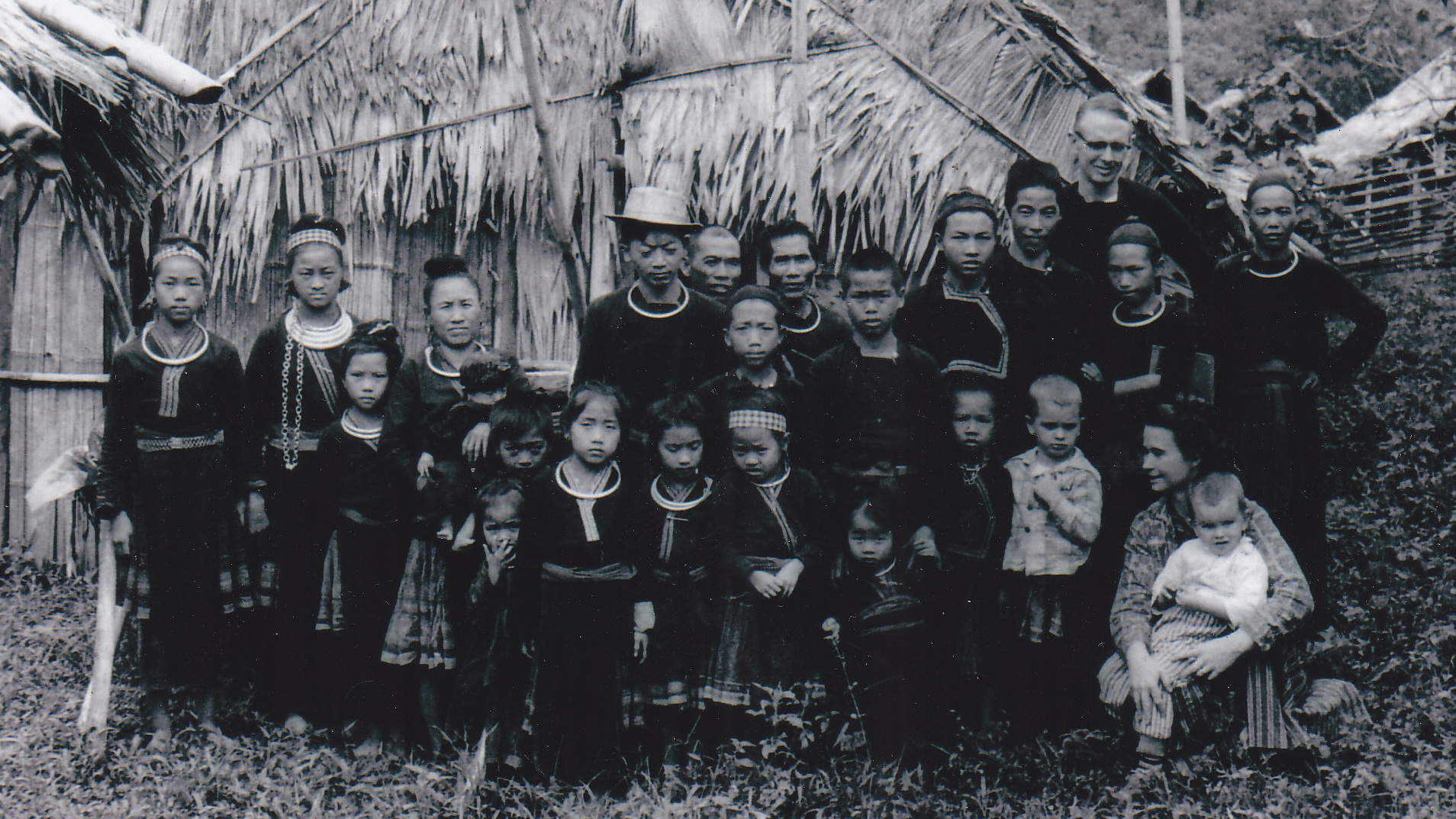
From Highland Villages to the Lowlands
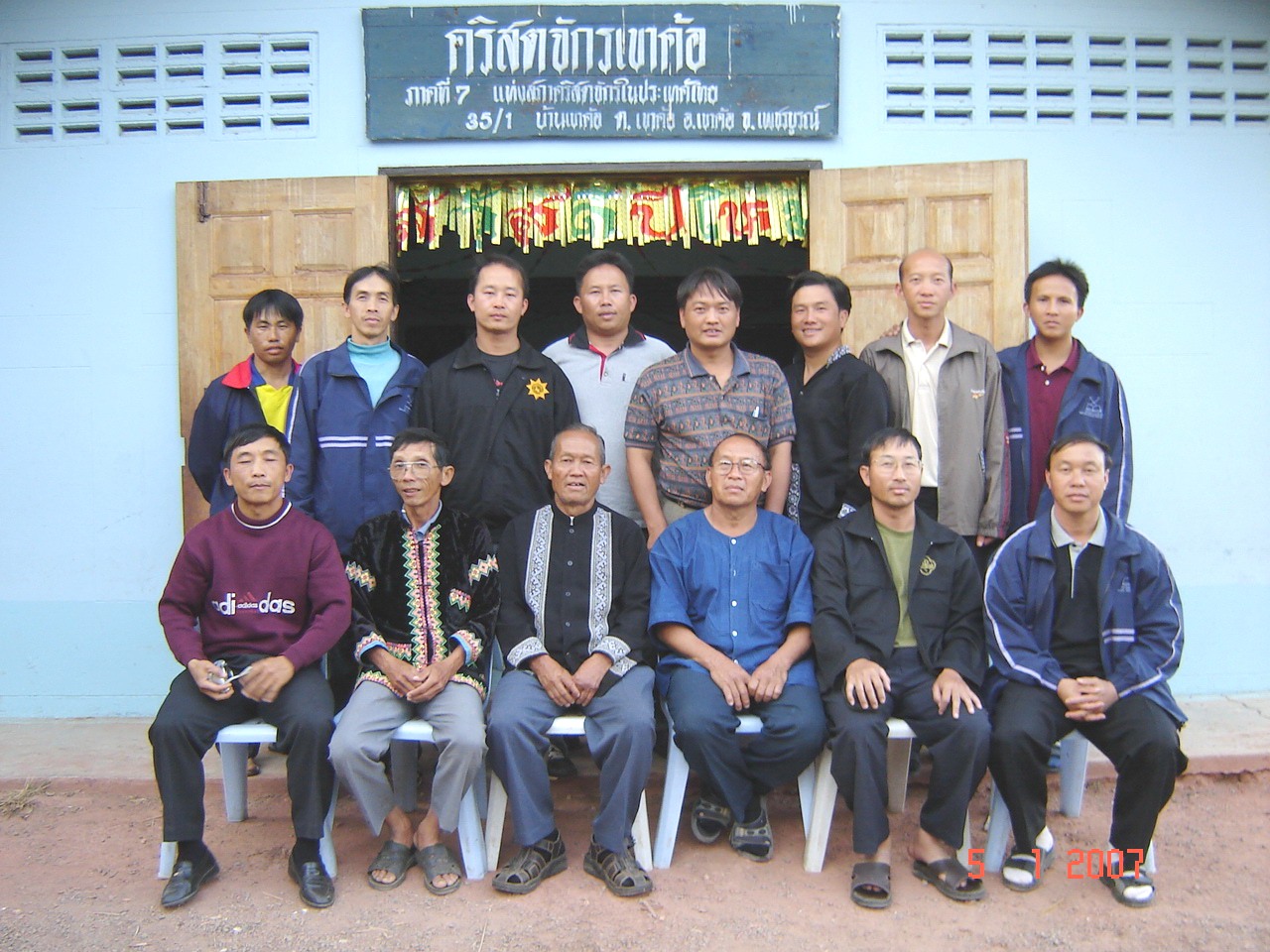
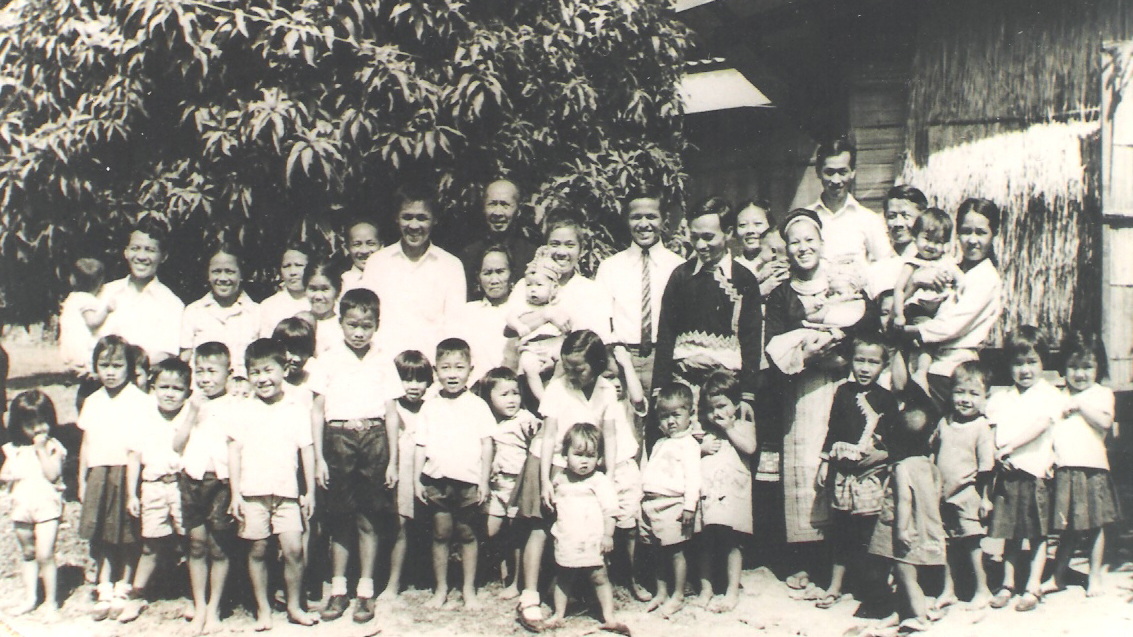
An OMF missionary (Xh. Vam Txoov) came to proclaim the Gospel to the Hmong people, residing in the Hmong village of Ban Khek Kao, Phetchabun Province. Through steadfast and tireless evangelism in the village and surrounding communities, the first Hmong converts came to faith in 1954. Subsequently, several more families accepted the faith and formed a fellowship of believers under the pastoral care of the missionaries.
Later, as communism spread across the highlands of Thailand around 1968 (B.E. 2511), the majority of Hmong Christians migrated down from the mountains to safe lowland areas under the protection and administration of the government. At that time, several Hmong families (nine families and two young women) dedicated themselves to theological study at the Phayao Bible Center in Chiang Rai Province (as Phayao was then part of Chiang Rai). Upon graduating, these pioneering servants of God went forth to evangelize and plant Hmong churches across many areas of northern Thailand, making an immense contribution to the Hmong Christian community in Thailand. Among the Hmong Christians who evacuated from the communist conflict, there were two groups: the first group relocated to Ban Rak Thai (Nong Sae) in Phetchabun Province under the pastoral leadership of Seng Suebthayat (ผป.); the second group relocated to Nakhon Thai District under the care of Mr. Txawjtuam Lis (Prachuap Ritnetikul, former Subdistrict Headman) and Mr. Txiajkuab Vaj. In 1971 (B.E. 2514), these two Christian groups moved together to establish a new village at Ban Khek Noi (present-day Khek Noi Subdistrict), with Seng Suebthayat (ผป.) serving as the lead pastor alongside other church leaders.
In the northern region, Khun Klang Church and Pa Kluai Church were established, likewise through the evangelistic work of OMF missionaries with vital support from pioneering Hmong church workers. Ajarn Yona Sae-Yang, a minister from Khek Noi Church, served as the pastor of Khun Klang Church (now Rev. Yona Phrutthithaiwa, affiliated with the Hmong Christian and Missionary Alliance in Thailand). At that time, Khek Noi Church, Khun Klang Church, and Pa Kluai Church were under the care of OMF missionaries under the Evangelical Fellowship of Thailand (EFT), who visited periodically. However, because the OMF mission at that time did not have a clear long-term church-governance policy, the Hmong church ministers consulted with one another and concluded that the Hmong churches should affiliate with a denomination whose vision promoted church self-support, leadership development, and evangelism, so that the Hmong churches could bear greater fruit in future ministry. Consequently, in 1982, the existing Hmong churches—namely Khek Noi Church, Khun Klang Church, and Pa Kluai Church—transferred their affiliation to District 7 of the Church of Christ in Thailand.
Formation of the Hmong Church Zone
Following the collapse of the communist insurgency in 1982 (B.E. 2525), a large number of Hmong people from the tri-province border area of Phetchabun, Phitsanulok, and Loei came forward to join the government program as “Participants in the Development of the Thai Nation.” Most of them settled in Ban Khek Noi and neighboring villages along the tri-province border. Through dedicated evangelism among these Hmong communities, combined with the encouragement and support of District 7, Khek Noi Church engaged in widespread outreach, resulting in the birth of many new churches—such as Huai Sai Nuea Church, Huai Nam Sai Church, Nam Khao Church, Thap Boek Church, Nam Chuang Church, and Ruam Thai Church, among others.
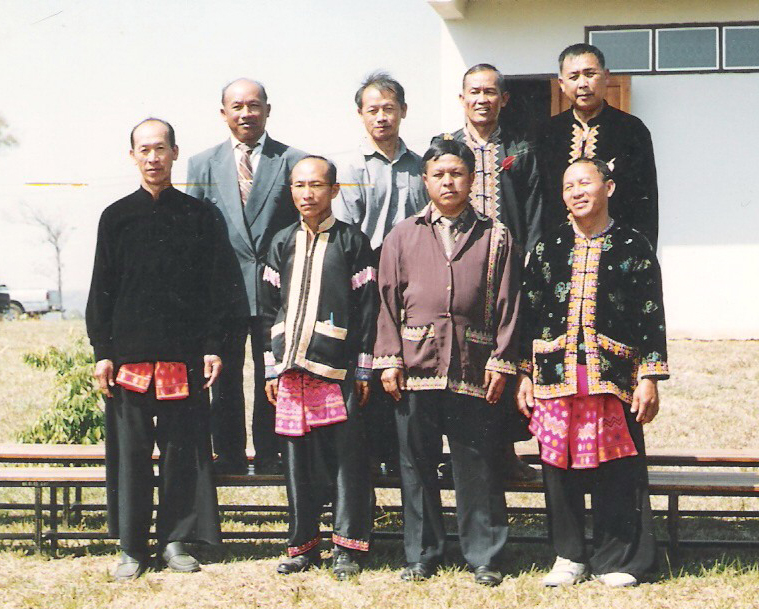
Subsequently, in 1989, the Hmong churches under District 7 convened a conference of leaders and ministers at Cha-am Camp in Phetchaburi Province. They unanimously agreed on the necessity of uniting the local Hmong churches into a clearly structured body to provide mutual support, serve together with strength, and move forward in unity toward the same direction, enabling the Hmong church ministry to grow and advance. They therefore organized as the “Hmong Churches Coordinating Committee of District 7” (คกมภ.7), which later developed into the “Hmong Church Zone of District 7” (คมภ.7). From that time onward, the Hmong churches in District 7 remained united in continuous shared ministry.
The Hmong Church Zone of District 7 held the vision and determination to expand its churches and elevate the Hmong Church Zone to become a full District of the Church of Christ in Thailand. Consequently, from the time of its formation as a zone, it prepared and practiced governance and ministry modeled after a District structure, developing step by step—establishing a zone constitution, a Zone Executive Committee, a Zone Working Committee, a Hmong Zone Assembly, a Zone Youth Fellowship, a Zone Women's Fellowship, a Zone Ministers' Fellowship, and a Zone Men's Fellowship, as well as implementing annual ministry planning and a 10% zone budget contribution from local churches and Christian halls from 1995 onward.
From Preparation to Official Inauguration
During the 20th anniversary celebration of the Hmong Church Zone in 2009, its ministry goals were further sharpened, with one key milestone stating: “By the year 2020, the Hmong Church Zone of District 7 shall become a District of the Church of Christ in Thailand.” Subsequently, in 2012, the Hmong Church Zone Assembly—its highest decision-making body—passed a resolution to submit a petition for the establishment of a new District to District 7 for consideration and formal processing. At the 2012 Annual Ordinary Session of District 7 and its District Executive Committee, District 7 passed a resolution endorsing the petition to be forwarded to the Church of Christ in Thailand in accordance with official procedures. The Church of Christ in Thailand reviewed and processed the petition through each required stage, and at the 34th Ordinary General Assembly of the Church of Christ in Thailand on October 20, 2016, held at Bangkok Christian College, the Assembly officially approved and appointed the Hmong Church Zone of District 7 as “District 20 of the Church of Christ in Thailand.” In praise and thanksgiving to God for His guidance over more than 60 years—from the very first convert to the development into a full District of the Church of Christ in Thailand—and to encourage and challenge District 20 to continue growing for the glory of God, District 20 together with District 7 (its Mentoring District) held a Thanksgiving Worship and Inauguration Service for District 20 at Khek Noi Church, Phetchabun Province—the historic birthplace of present-day District 20—on April 20, 2017.
Today, District 20 has its own Constitution and Bylaws for self-governance, operating with a ministry administration system that emphasizes inclusive and equitable participation across all sectors of the District, so that every sector may understand and constructively collaborate in unity toward its shared vision and goals. By the grace of God, District 20 continues to press on steadfastly toward its goal for the glory of God alone.
District 20 of the Church of Christ in Thailand comprises 18 churches, 7 Christian halls, and 9 preaching points, with 2,616 full (communicant) members and 3,345 associate members, totaling 5,961 members in all.